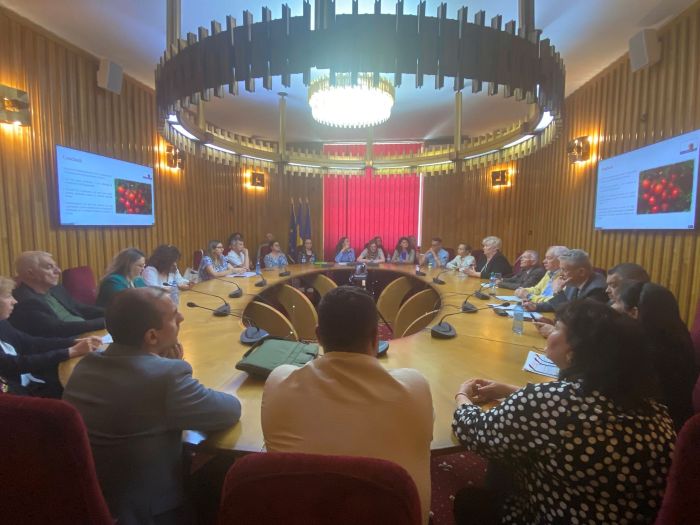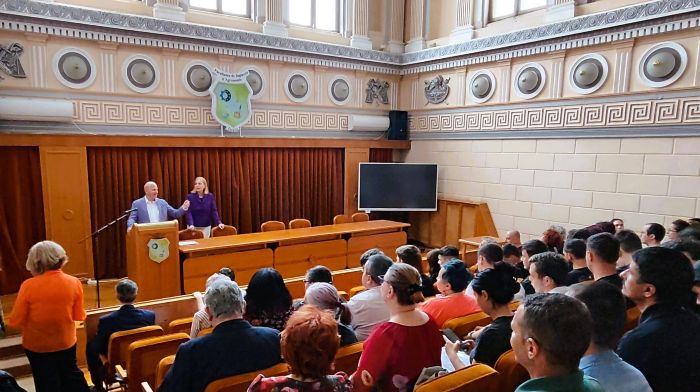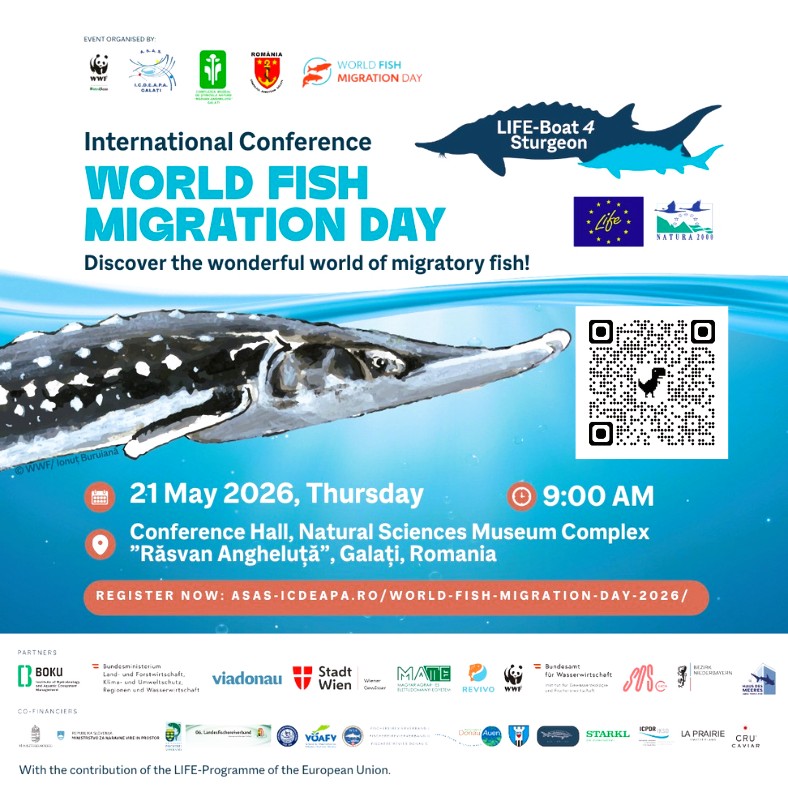
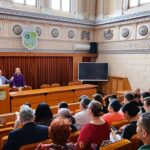
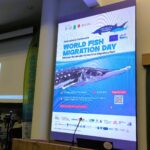
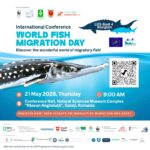
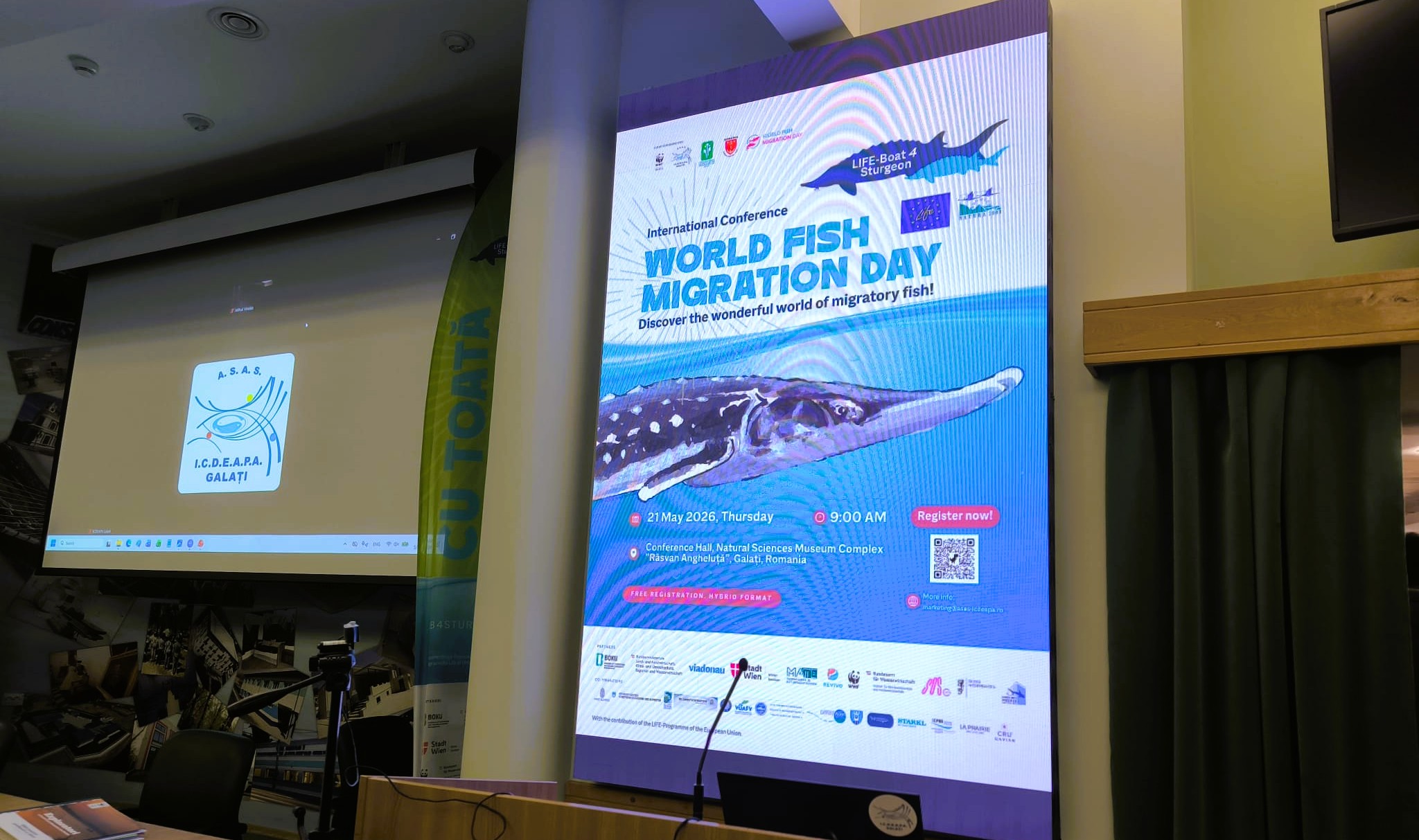
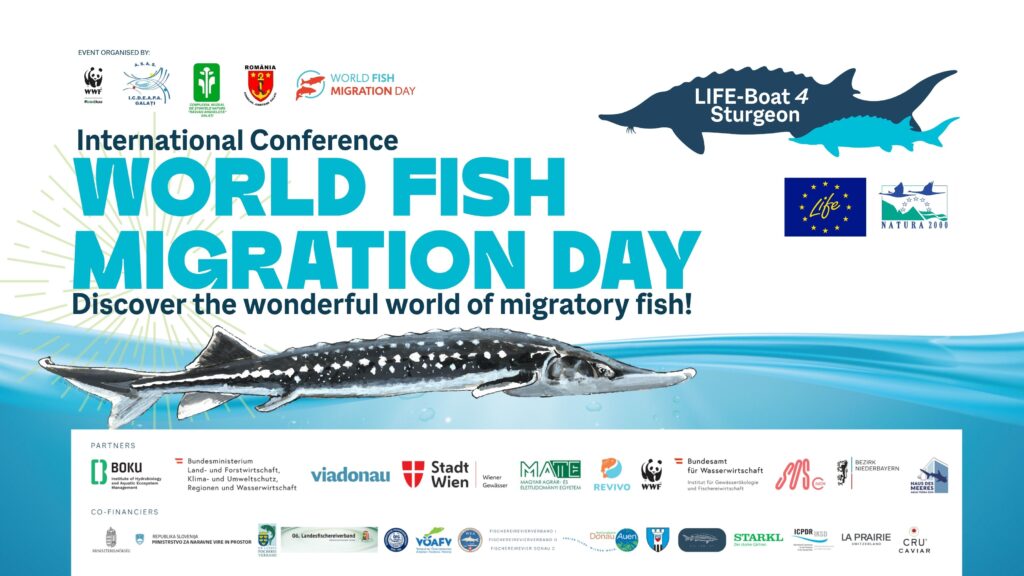
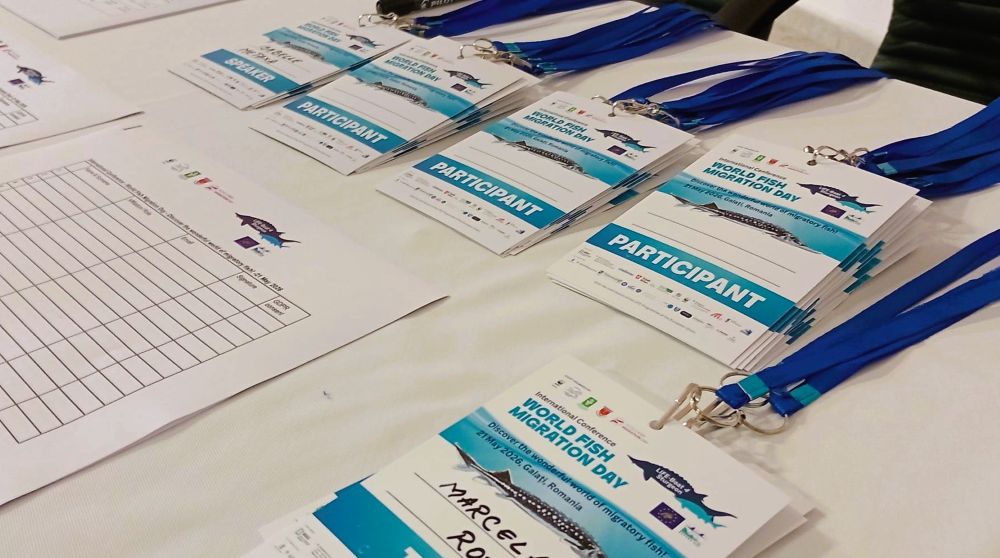
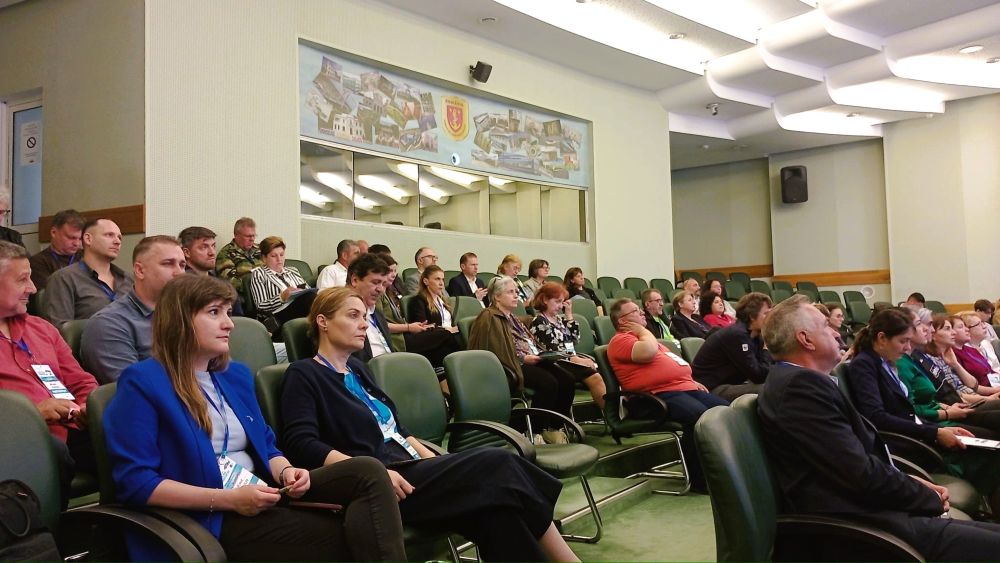
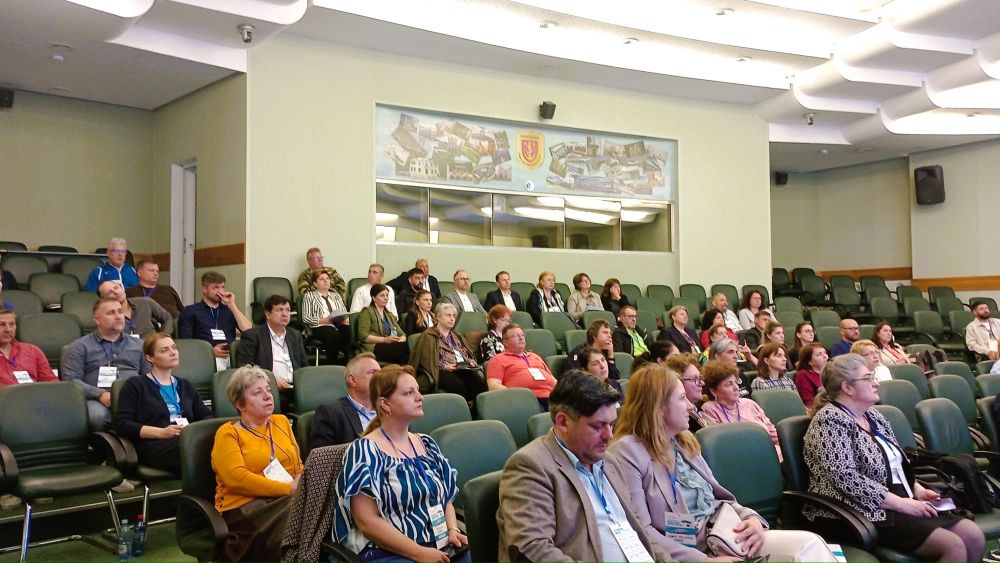
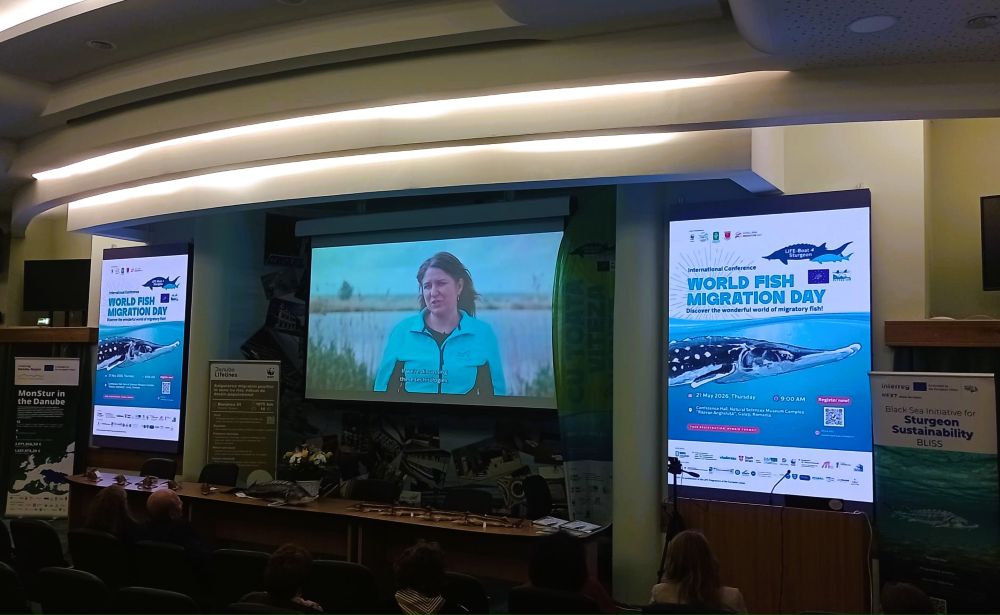
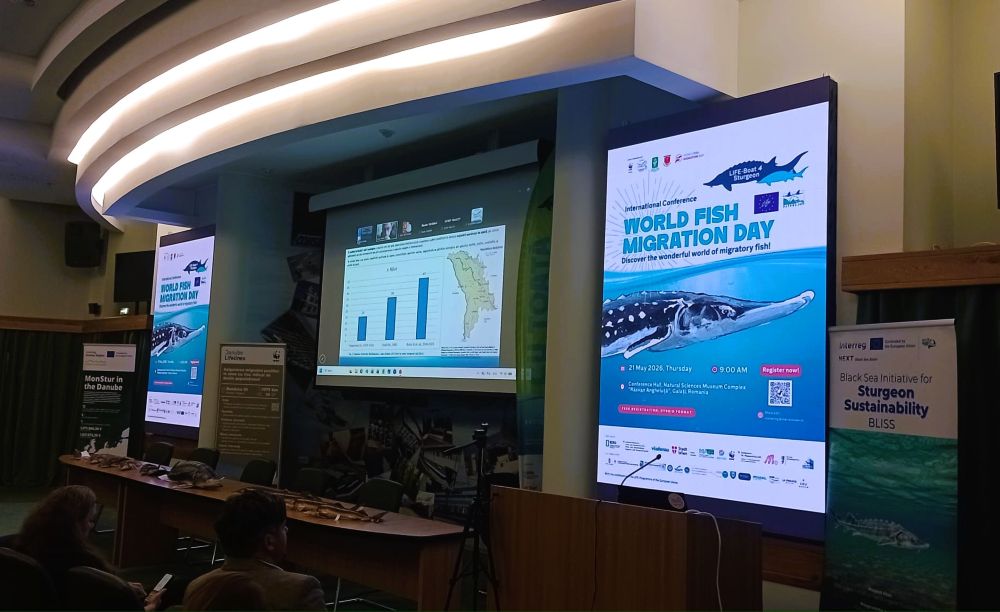
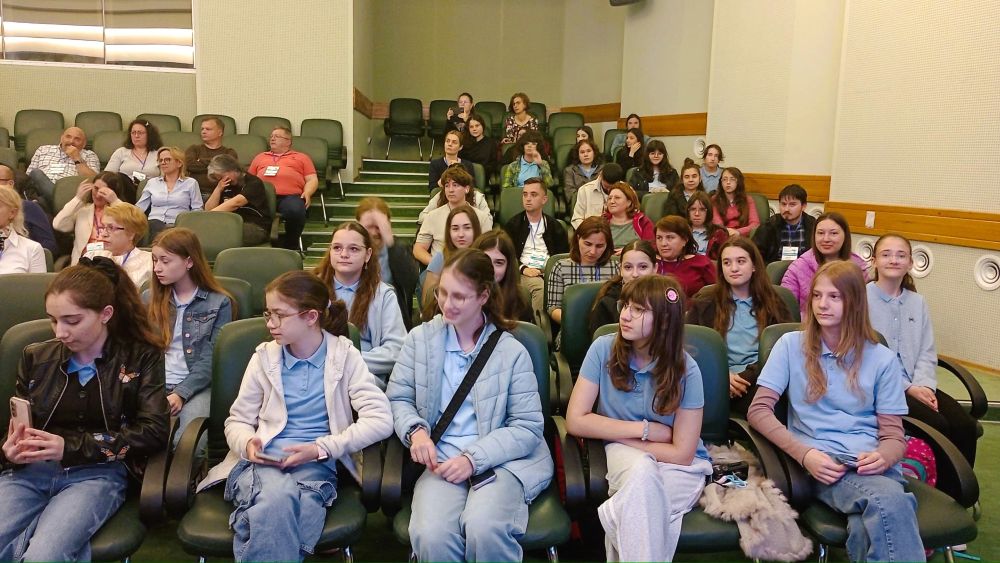
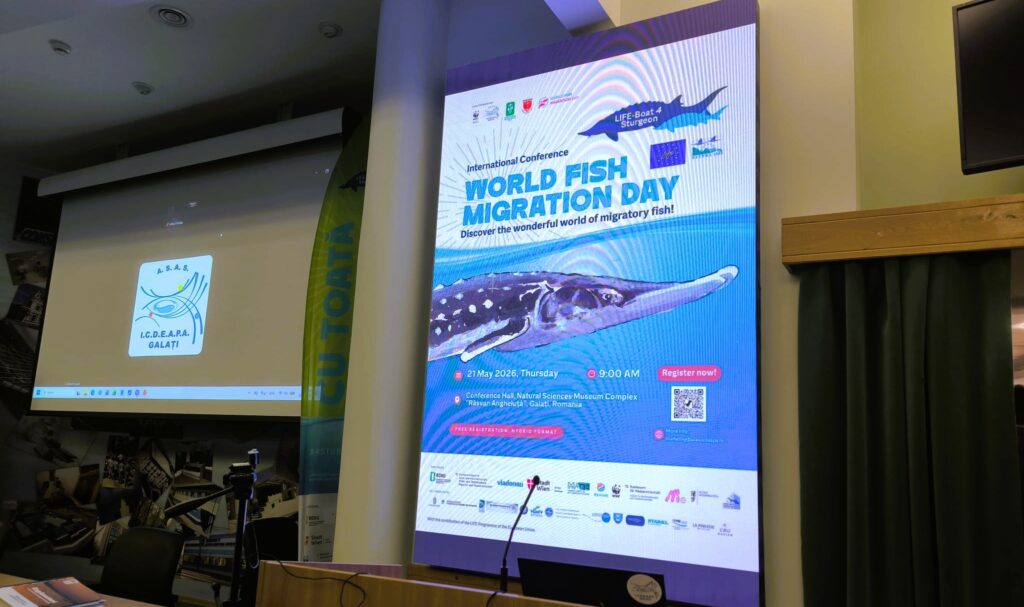
World Fish Migration Day was celebrated in Galați with an international conference involving participants from four countries. For one day, Galați became a place where scientific researchers and biodiversity experts from Romania, Austria, France, and Moldova shared the latest information on migratory fish during the International Conference “World Fish Migration Day – Discover the Wonderful World of Migratory Fish!” with special attention given to sturgeons. Organized on May 21, 2026, by WWF-Romania (World Wide Fund for Nature) as part of the LIFEBoat 4 Sturgeons project, in partnership with the Institute of Aquatic Ecology, Fisheries, and Aquaculture Research-Galați (ICDEAPA), and the “Răzvan Angheluță” Museum of Natural Sciences, the event was a success.
The effort to conserve migratory fish was the main theme addressed in the scientific presentations. Considered indicators of healthy marine and river ecosystems and emblematic species of the Danube, sturgeons hold significant cultural, historical, and economic importance for communities in the Danube basin. On this occasion, an art exhibition titled “The Journey of Migratory Fish – Between Freedom and Obstacles” was unveiled, created by children from the “Miron Costin” Middle School in Galați, coordinated by teachers Danusia Pavăl and Marcela Anton, as part of the initiative to involve young people in activities promoting the protection of biodiversity in the Danube.
During the conference, I presented our activities within the LifeBoat4Sturgeons project, such as the releases carried out with BOKU, MATE AKI HAKI, as well as with ICDEAPA in Isaccea in 2024, and the steps taken to create a genetic database across multiple sturgeon breeding facilities distributed across several countries: one in Austria, in Vienna, on a vessel that was specially modified for such activities; another at an aquaculture institute’s farm in Hungary; and a third in a container in Slovenia, near the Mura River. We aim to have as many breeders as possible, with high genetic diversity, from the Danube, from which the young fish will be released back into the Danube,” stated Cristina Munteanu, National Coordinator for Sturgeon Projects, WWF-Romania (World Wide Fund for Nature).
For us, those who live and work in the Lower Danube Basin, fish migration, from the legendary sturgeon to the Danube shad, represents the ultimate barometer of our ecosystems’ health. The ancestral connection between the Black Sea and the Danube River is essentially an ecological “Silk Road,” which we have a duty to keep open. Conserving migratory species is an effort of European solidarity,” declared CS II Univ. Assoc. Prof. Dr. Floricel Maricel DIMA, General Director of ICDEAPA Galați.
In the context of the need to conserve these species, which are threatened with extinction, we believe that museums, aquariums, and zoos worldwide play an important role in bringing people closer to biodiversity and in transforming scientific information into an accessible and relevant experience for the community. Through this partnership, we aim to contribute to increasing awareness of the importance of ecological connectivity and the necessity of protecting migratory species in the Danube Basin and the Black Sea,” stated Cătălin Popa, Manager of the Răsvan Angheluță Museum of Natural Sciences, Galați.
The region has progressively imposed strict fishing limits or total bans on sturgeon fishing, with most countries prohibiting commercial catches by 2020, though exceptions remain in some areas of Austria, the Czech Republic, Slovakia, and Croatia.
LIFE-Boat4Sturgeon is coordinated by the University of Natural Resources and Life Sciences – BOKU. The total value of the project amounts to 11.8 million euros, of which 67% is covered by the European Union’s LIFE program. Project partners include the Federal Ministry of Agriculture and Forestry, Climate Action and Environment, Regions and Water Management of the Republic of Austria; viadonau; the City of Vienna – Wiener Gewässer; WWF-Romania; WWF-Ukraine; WWF-Bulgaria; Revivo; MATE AKI HAKI; the Federal Office for Water Management; IUCN; the Lower Bavaria district; and Haus des Meeres. Co-financiers of the project are the Hungarian Ministry “Miniszterelnökség,” the Slovenian Ministry of Natural Resources and Spatial Planning, the Bavarian State Fishing Association, the Lower Austria State Fishing Association, the Upper Austria State Fishing Association, the Austrian Society of Fishing 1880, the Austrian Workers’ Fishing Associations, the Vienna Fishing Committee, Fishing Districts I and II, the Danube C Fishing District, the Danube Floodplains National Park, the town of Drösing, and other funding bodies.